Plenary Speakers

April Nowell
University of Victoria in British Columbia
Victoria, Canada
April Nowell is a Paleolithic archaeologist and Professor of Anthropology at the University of Victoria in British Columbia, Canada. She holds a PhD in Anthropology from the University of Pennsylvania. She directs an international team of researchers in the study of Lower and Middle Paleolithic sites in Jordan and collaborates with colleagues on the study of cave art in Australia and France. She and her colleagues working in Jordan published the world’s oldest identifiable blood on stone tools, demonstrating that 300,000 years ago early humans ate a range of animals from duck to rhinoceros. She is known for her publications on cognitive archaeology, Neandertal lifeways, Paleolithic art, the archaeology of children and the relationship between science, pop culture, and the media.
Her work has been covered by more than 100 media outlets, and her blood residue work was named one of Time Magazine’s top 100 discoveries. She is the co-editor of multiple volumes including Archaeology of Night: Life After Dark in the Ancient world (with Nancy Golin), and the author of the book Growing Up in the Ice Age, winner of the 2023 European Association of Archaeologists Book Prize.
Her work has been covered by more than 100 media outlets, and her blood residue work was named one of Time Magazine’s top 100 discoveries. She is the co-editor of multiple volumes including Archaeology of Night: Life After Dark in the Ancient world (with Nancy Golin), and the author of the book Growing Up in the Ice Age, winner of the 2023 European Association of Archaeologists Book Prize.
Abstract: Paleolithic Children Come of Age
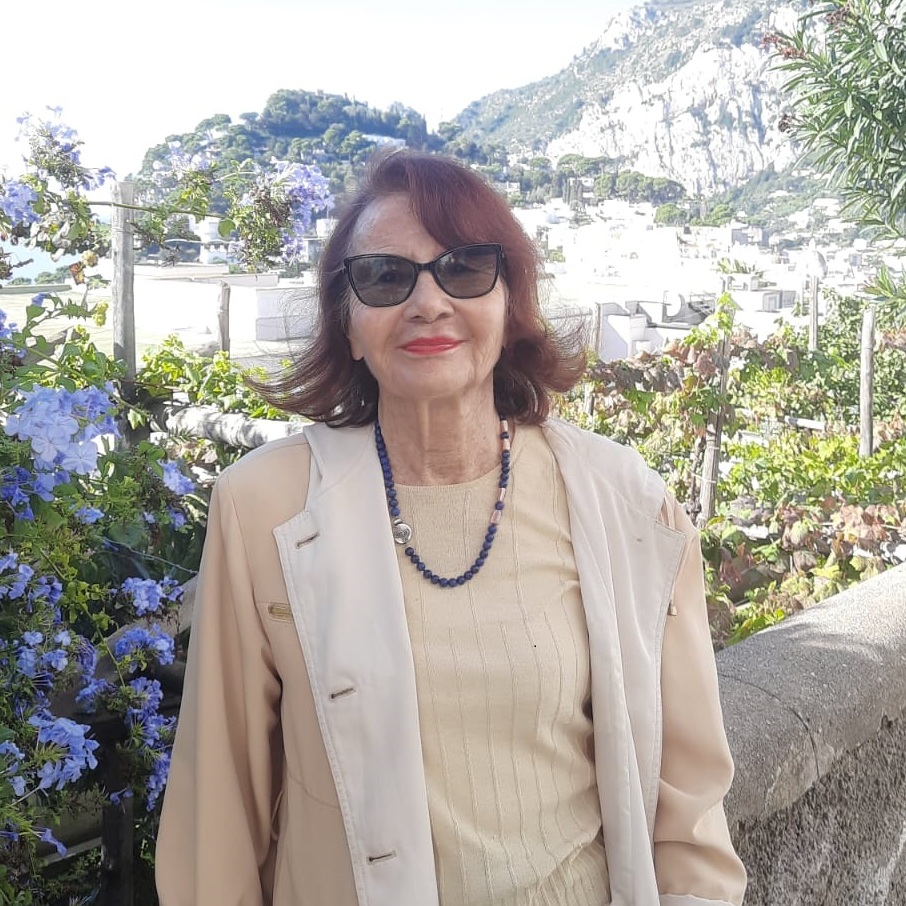
Barbara E. Barich was professor of African Ethnography and Prehistory at La Sapienza University in Rome (1994-2012) and currently conducts research at ISMEO. In May 2025 has been elected President of the International Academy of Prehistory and Protohistory and from September 2023 to October 2024 served as interim President of the UISPP. Previously she had been President of the UISPP Commission 'Art and Civilisation of the Sahara during Prehistoric Times' for many years.
Barich represented La Sapienza University on the International Certificate in African Archaeology at Université Libre de Bruxelles (1995-2002) and was a member of the Doctoral Schools in African Studies at University of Naples 'L'Orientale' and Archaeology at La Sapienza. Her research focuses on the earliest ceramic societies of North Africa and the Sahara and explores with multidisciplinary approaches the origins of food production and the development of Neolithic societies. She has led long-term archaeological projects in Tadrart Akakus and Jebel Gharbi-Nefusa in Libya, and in the Farafra Oasis in Egypt. She has carried out analytical studies on lithic and ceramic industries, alongside key issues relating to the conservation and enhancement of cultural heritage. In the 1990s, she promoted the establishment of the 'Forum for African Archaeology and Cultural Heritage' in Rome, and from 2010 to 2012, she directed the Gilf Kebir Conservation Project in southern Egypt.
She is a member of numerous national and international scientific academies, and sits on the editorial boards of various journals. Her extensive bibliography comprises around 200 publications, focusing primarily on ecological perspectives in archaeological reconstructions.
Barich represented La Sapienza University on the International Certificate in African Archaeology at Université Libre de Bruxelles (1995-2002) and was a member of the Doctoral Schools in African Studies at University of Naples 'L'Orientale' and Archaeology at La Sapienza. Her research focuses on the earliest ceramic societies of North Africa and the Sahara and explores with multidisciplinary approaches the origins of food production and the development of Neolithic societies. She has led long-term archaeological projects in Tadrart Akakus and Jebel Gharbi-Nefusa in Libya, and in the Farafra Oasis in Egypt. She has carried out analytical studies on lithic and ceramic industries, alongside key issues relating to the conservation and enhancement of cultural heritage. In the 1990s, she promoted the establishment of the 'Forum for African Archaeology and Cultural Heritage' in Rome, and from 2010 to 2012, she directed the Gilf Kebir Conservation Project in southern Egypt.
She is a member of numerous national and international scientific academies, and sits on the editorial boards of various journals. Her extensive bibliography comprises around 200 publications, focusing primarily on ecological perspectives in archaeological reconstructions.
Abstract: Shifting Paradigms: The Impact of Multidisciplinary Developments on the Study of Relations between North Africa and the Near East during the Holocene
Barbara E. Barich
Sapienza University
Rome, Italy
Nicholas J. Conard
University of Tübingen
Tübingen,Germany
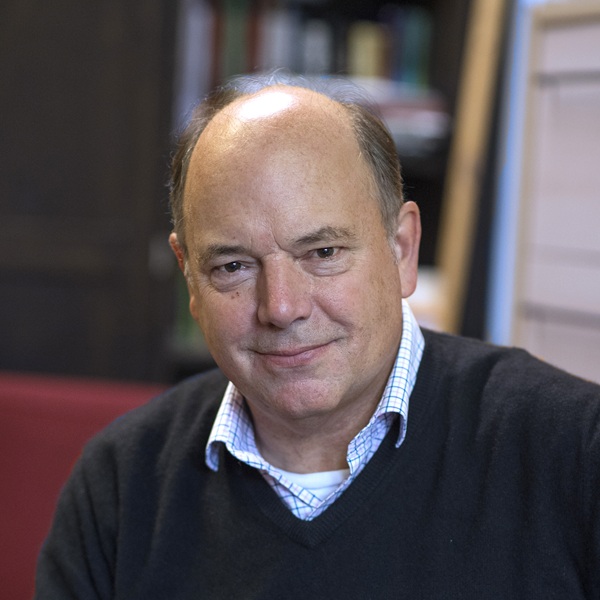
Nicholas J. Conard holds bachelor’s degrees in anthropology and chemistry, as well as a master's in physics, geology, and anthropology from the University of Rochester. He earned his Ph.D. in anthropology from Yale University, focusing on Neanderthal archaeology. Conard has held academic positions at the University of Connecticut and the University of Tübingen, and has served as a visiting professor at institutions such as the University of Cape Town, Peking University, University of Dar es Salaam, and Yale University.
He is the director of the Urgeschichtliches Museum in Blaubeuren and the co-speaker of the Excellence Cluster Human Origins in Tübingen. His research covers Paleolithic archaeology, human evolution, environmental reconstruction, settlement history of western Eurasia and Africa, and the origins of agriculture. N.J. Conard is an active field archaeologist who has led numerous excavations and survey projects in Germany, South Africa, Syria, Iran, and Tanzania. His excavations have uncovered important Lower, Middle, Upper, Epipaleolithic, and Neolithic sites, along with early examples of figurative art, musical instruments, and other significant innovations. Results from these excavations have been prominently featured in major exhibits worldwide.
He is the director of the Urgeschichtliches Museum in Blaubeuren and the co-speaker of the Excellence Cluster Human Origins in Tübingen. His research covers Paleolithic archaeology, human evolution, environmental reconstruction, settlement history of western Eurasia and Africa, and the origins of agriculture. N.J. Conard is an active field archaeologist who has led numerous excavations and survey projects in Germany, South Africa, Syria, Iran, and Tanzania. His excavations have uncovered important Lower, Middle, Upper, Epipaleolithic, and Neolithic sites, along with early examples of figurative art, musical instruments, and other significant innovations. Results from these excavations have been prominently featured in major exhibits worldwide.
Abstract: Early art and music from the Swabian Jura and the biogeography of modern humans
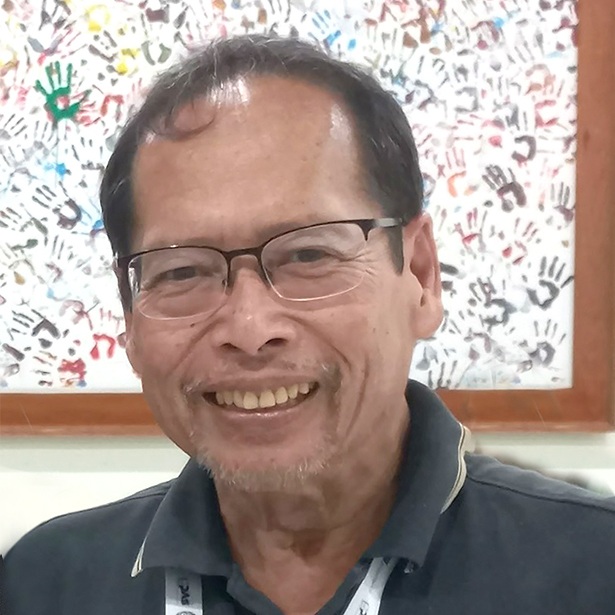
Palaeoanthropologist, Harry Widianto is currently research professor at the Indonesian National Research and Innovation Agency (BRIN), Indonesia. Since his PhD in France (1993), he has been successively Director of Archaeological Research Center of Banjarmasin (Borneo, 1994-1998), then the same center in Yogyakarta (Java, 1998-2008), before becoming the first Director of the Sangiran World Heritage Conservation office (2009-2013). He was subsequently Director of Cultural Properties and Museums at the Ministry for Education and Culture (2013-2018), a period which witnessed the building and opening of numerous prehistoric museums in Indonesia.
He acted as PI in many field research projects in Indonesia, including the BPS2021 (Bumiayu – Prupuk Semedo) National Geographic one, carried out with an international partnership. He is author and co-author more than 144 publications, among others are 30 peer reviewed journals and 65 books. He regularly teaches in Indonesian universities and abroad, and supervised or co-supervised numerous Master and PhD theses, notably in the framework of European-Asian academic networks, including international intensive programs.
Harry Widianto actively contributed to the inscription of the Sangiran site on the World Heritage list in 1996, and coordinated or co-coordinated several international projects, e.g. PREHsea (Managing Prehistoric Heritage in Southeast Asia, involving Europe, Indonesia and Philippines). More recently, he designed then launched the UNESCO Category II Centre CHEADSEA (Center for Human Evolution, Adaptations and Dispersals in Southeast Asia).
Founding member of the UISPP commission for Southeast Asia, Harry Widianto (who took part in several UISPP congresses) is the coordinator for Indonesia of the UISPP APT2025 international conference in Salatiga-Sangiran-and Yogyakarta, Indonesia, held in October-November 2025,
He acted as PI in many field research projects in Indonesia, including the BPS2021 (Bumiayu – Prupuk Semedo) National Geographic one, carried out with an international partnership. He is author and co-author more than 144 publications, among others are 30 peer reviewed journals and 65 books. He regularly teaches in Indonesian universities and abroad, and supervised or co-supervised numerous Master and PhD theses, notably in the framework of European-Asian academic networks, including international intensive programs.
Harry Widianto actively contributed to the inscription of the Sangiran site on the World Heritage list in 1996, and coordinated or co-coordinated several international projects, e.g. PREHsea (Managing Prehistoric Heritage in Southeast Asia, involving Europe, Indonesia and Philippines). More recently, he designed then launched the UNESCO Category II Centre CHEADSEA (Center for Human Evolution, Adaptations and Dispersals in Southeast Asia).
Founding member of the UISPP commission for Southeast Asia, Harry Widianto (who took part in several UISPP congresses) is the coordinator for Indonesia of the UISPP APT2025 international conference in Salatiga-Sangiran-and Yogyakarta, Indonesia, held in October-November 2025,
Abstract: From Homo erectus To Homo sapiens In Southeast Asia In Late Pleistocene, Replacement Or Local Evolution?
Harry Widianto
Indonesian National Research and Innovation Agency (BRIN)
Jakarta, Indonesia
Tomasz Goslar
Poznań Radiocarbon Laboratory / PPNT
Poznań, Poland
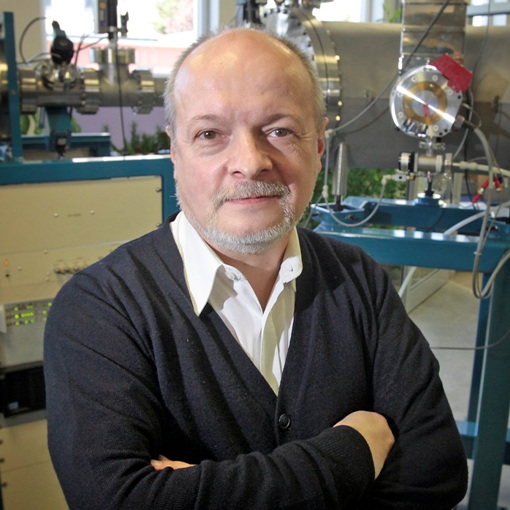
Professor Tomasz Goslar is a specialist in geochronology and the application of natural radioisotopes to reconstruct past environmental changes. He performed scientific research on methodology and application of 14C dating, isotopic disequilibrium in speleothems, changes of atmospheric 14C concentration at the beginning of the Holocene, environmental changes in the Late Glacial/Holocene boundary, using annually laminated lake sediments, construction of age-depth models of intensively dated profiles, of Bayesian chronological models of past human activity in particular sites and regions, and methodology of 14C dating of calcareous mortars. Author/co-author of over 150 papers in peer-reviewed journals, got over 8500 citations (h-index = 50) recorded by Google Scholar.
Tomasz Goslar leads the Poznań Radiocarbon Laboratory, which has dated more than 170,000 samples for approximately 5,000 scientists from more than 50 countries. He was a partner in several projects funded by the EU (Integrated Projects: 'Millennium' and 'Ecochange', and Research Training Network 'NICE'), in the project ‘Climpol’ funded by the Swiss-Polish Research Program, and ‘Ecogen’, financially sponsored by the Norwegian Science Foundation. He also actively collaborated with the FP5 EU-sponsored Project 'PINE’ and with the Project ‘Silk Road Fashion’ sponsored by the Deutsches Archaeologisches Institut.
Tomasz Goslar leads the Poznań Radiocarbon Laboratory, which has dated more than 170,000 samples for approximately 5,000 scientists from more than 50 countries. He was a partner in several projects funded by the EU (Integrated Projects: 'Millennium' and 'Ecochange', and Research Training Network 'NICE'), in the project ‘Climpol’ funded by the Swiss-Polish Research Program, and ‘Ecogen’, financially sponsored by the Norwegian Science Foundation. He also actively collaborated with the FP5 EU-sponsored Project 'PINE’ and with the Project ‘Silk Road Fashion’ sponsored by the Deutsches Archaeologisches Institut.